
Clay County Criminal Court Cases
Clay County criminal court cases split by level. Felonies belong to the 97th Judicial District Court, a regional District Court serving Archer, Clay, and Montague Counties. The Clay County District Clerk keeps the filed felony case record. Class A and Class B misdemeanor files route to the constitutional County Court and County Clerk. Fine-only Class C charges, citations, and lower-court warrants may sit with Clay Justice Court or the municipal court named on the citation. This court name matters more than the arresting agency when locating a filed case.
The court file begins when a complaint, information, or indictment is filed. It can then gain settings, motions, pleas, orders, a judgment, sentence terms, and cost entries. The Sheriff’s booking file does not replace it. If a person first found a booking, the later Clay County arrest lookup must be matched to the proper clerk’s case number before anyone can state how the charge ended.
Clay County Courts by Charge
Clay County’s court map prevents a common records mistake: asking one clerk for every criminal matter. The District Clerk’s counter is on the first floor, east side of the courthouse at 100 N. Bridge Street in Henrietta. The County Clerk works from the annex at 214 N. Main. Clay Justice Court is also at 214 N. Main, while a city citation may name Henrietta Municipal Court instead. Each office keeps only the files within its court’s authority.
| Case level | Clay County court | Record custodian |
|---|---|---|
| Felony | 97th Judicial District Court | Clay County District Clerk |
| Class A or B misdemeanor | Constitutional County Court | Clay County Clerk |
| Fine-only or Class C | Justice or named municipal court | Clerk of that court |
The 97th District Court’s Clay County routing page shows the regional court path. The image below captures that official route.
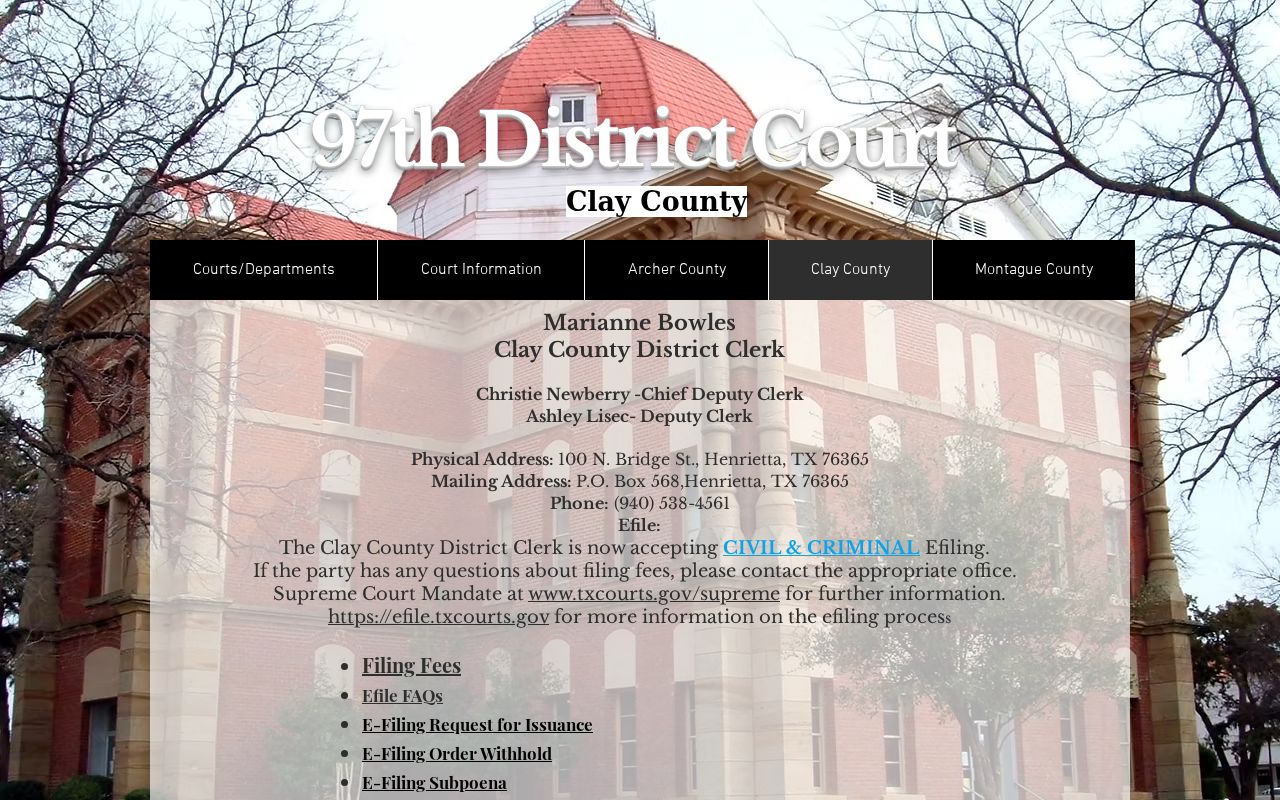
That regional structure explains why the judge and prosecutor may have Montague contacts while the Clay felony file remains with the District Clerk in Henrietta.
Searching Clay County Case Records
Start with the court level, not a broad name query. The District Clerk links to re:SearchTX for case data, but the Texas Office of Court Administration reports that the platform’s public document inventory does not include criminal case records. It may still expose integrated case metadata. It must not be treated as a complete source of Clay County criminal PDFs. A missing result, docket entry, or image should lead to the clerk that owns the case.
- Identify the court from the citation, charging paper, bond sheet, or known offense level.
- Open re:SearchTX for District Court case metadata, then select Cases or Hearings and the useful search mode.
- Search with a case number when known. For a party search, use a full name and narrow with the filed date or case type.
- Read the docket sequence and note the court, case number, charge, setting, and current disposition rather than relying on one status word.
- Call or visit the District, County, Justice, or municipal clerk for missing entries and ask for the current plain or certified copy price.
| Field or control | Type | Required | Use |
|---|---|---|---|
| Basic Search | Text | No fixed field stated | Runs the general query shown in the official guide. |
| Search By | Dynamic control | Yes for a targeted search | Changes the fields available for party, attorney, judge, or case data. |
| Cases or Hearings | Mode | Yes | Separates case results from hearing results. |
| Wildcard * | Search aid | No | Works with first or last names for parties, judges, and attorneys. |
| Sort By | Selector | No | Orders by newest date, oldest date, or case number. |
Clay County Criminal Dockets Online
re:SearchTX can show case number and type, parties, attorneys, judicial officers, filings, hearings, and a register-of-actions sequence when the participating clerk supplies them. Users may also see actions for alerts, folders, summaries, sharing, or eligible document purchase. Yet metadata and document access are two different claims. The public platform’s civil-document focus means a Clay County criminal docket may appear without downloadable pleadings or orders.
When that happens, call the District Clerk at 940-538-4561. Give the Clay County case number, party name, and approximate year. Ask whether the court file is electronic, paper, archived, image-restricted, or unavailable. The current plain and certified criminal-copy prices were not published in the inspected official sources, so obtain a quote before ordering. The District Clerk’s Certified Payments link is only for felony court costs, requires the case number, and adds 2.65%. It is not a record-copy cart and is not for traffic tickets.
The Clay Justice Court record-access page distinguishes filed case records from other judicial material. Its official screen is shown below.
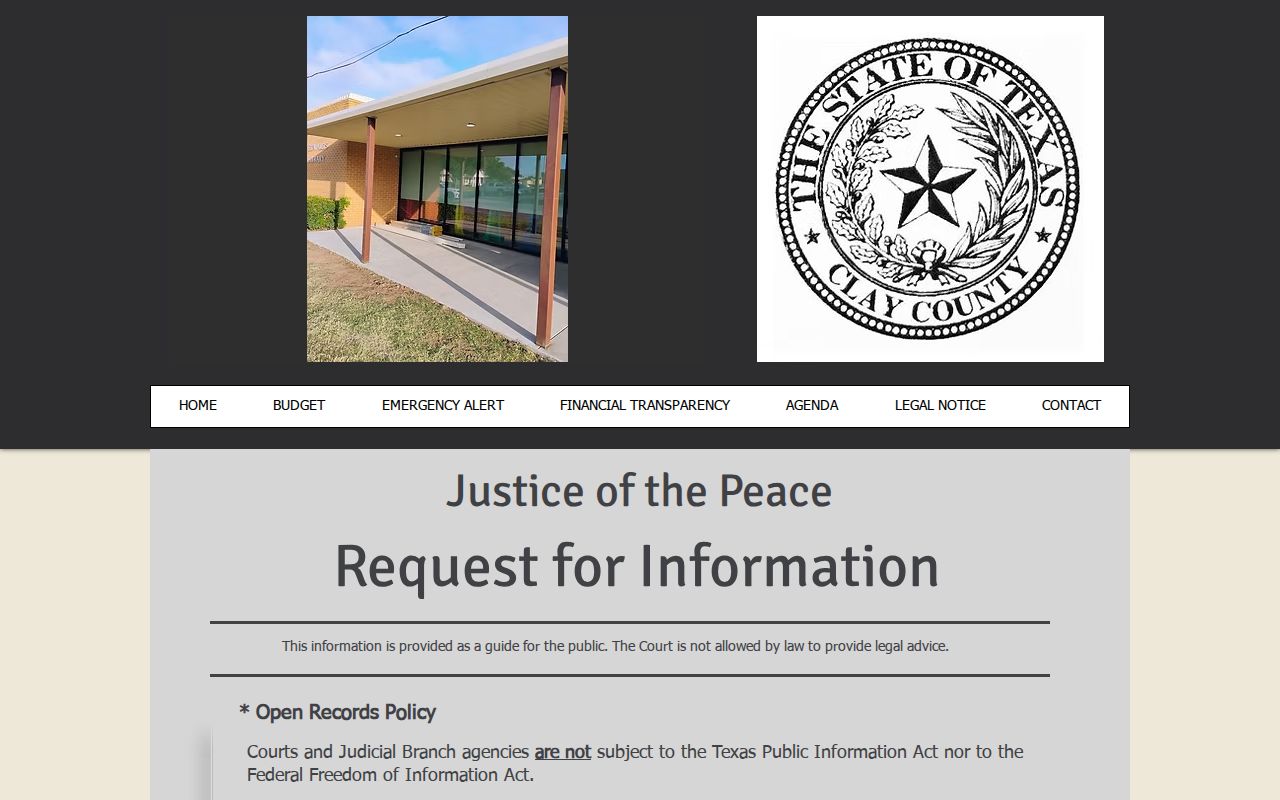
This division is why a Public Information Act request to the Sheriff is not a shortcut to a court docket.
Inside a Clay County Case File
A Clay County criminal case file shows the court’s acts, not just the accusation at intake. A complaint can support the first charge. An information is a common misdemeanor charging instrument. A grand-jury true bill results in a felony indictment. Later filings can amend or reduce a charge, and the final judgment may differ from the booking label. Read the docket in order and confirm the last filed disposition for each count.
| Case Number and Court | Identifies the specific Clay County court file and its custodian. |
|---|---|
| Charging Document | Shows the complaint, information, or indictment and the charge as filed. |
| Parties and Counsel | Names the parties, attorneys, judge, and appointed counsel where entered. |
| Docket Entries | Lists filings, settings, motions, orders, pleas, and other court acts by date. |
| Hearings | Records arraignment, pretrial, plea, trial, sentencing, and other settings when available. |
| Disposition and Judgment | States the outcome for each charge, including dismissal, acquittal, conviction, or deferred adjudication. |
| Sentence and Costs | Shows punishment, supervision, restitution, fees, and related conditions imposed by the court. |
Clay County Criminal Case Outcomes
Short docket labels can hide major differences. “Pending” means the Clay County criminal case has not reached a final result; it does not mean guilt. A dismissal ends that charge without a judgment of guilt, though the earlier arrest may remain until lawfully cleared. An acquittal is a not-guilty finding. A grand-jury “no-bill” means the grand jury declined to indict. Deferred adjudication holds back a final guilt judgment during supervision, but Texas law still places it in the public DPS category unless a lawful nondisclosure applies.
- Arraignment
- The hearing where the accused receives the formal charge and enters a plea.
- Disposition
- The current or final outcome recorded for a charge.
- Nolle prosequi
- A prosecutor’s formal choice to stop pursuing a charge.
- Deferred adjudication
- Supervision that postpones a final guilt judgment and may end without a conviction.
- Capias
- A court order directing that a person be arrested in connection with a case.
Note: Read the judgment and last docket entries together because a booking charge may not match the Clay County case’s final outcome.
How a Criminal Case Moves
Clay County criminal court cases usually move from an arrest or summons to prompt magistration, prosecutor review, and the filing of a complaint, information, or indictment. Arraignment places the plea on the record. Pretrial work can include discovery, motions, and settings. The matter then ends through a negotiated plea, dismissal, or trial, followed by judgment and sentence when required. An appeal may create a separate appellate record, while the local clerk retains the trial-level file.
Case flow: Charges Filed › Arraignment › Pretrial › Plea or Trial › Disposition › Sentencing
The process also sends qualifying outcome data back to the Texas Department of Public Safety. Reporting lag or a missing disposition can make DPS data differ from the Clay County clerk’s newer file. The certified local judgment is the best source for the court’s actual result.
Clay County Criminal Docket Timing
The 97th District’s local rules make the third Monday the Clay County summary-docket day, with regular nonjury settings beginning at 9:00 a.m. Criminal matters receive scheduling preference in Archer and Clay so the regional District Attorney can also meet grand-jury duties. That local rhythm helps explain a sequence of settings, but it is not a promise that each criminal case will be heard on a given date. Always confirm the specific docket entry with the clerk.
District Attorney Katie Boggeman serves the three-county district from Montague. Clay County does not publish a separate walk-in prosecution office or local diversion portal. The assigned-counsel path is also regional rather than a public-defender office. After a request at magistration, the magistrate sends the financial affidavit and probable-cause material to the District Clerk. A felony request goes to the 97th District Judge; a misdemeanor request goes to the County Judge. Mixed charges route to the District Judge for appointment on both.
Case Record Access & Restrictions
Filed Clay County criminal court records generally follow the court’s access process, while the Texas Public Information Act governs many executive-branch records. Rule 12 of the Texas Rules of Judicial Administration covers judicial administrative records and includes a denial appeal. It is not the access rule for every pleading or judgment inside a filed criminal case. Sending a court-file request to the Sheriff can delay the search because that office expressly says it does not hold court records.
Online redaction does not prove that no paper file exists. For an older or missing Clay County case, identify the court, party, case number if known, and approximate year. Then ask the right clerk what remains public and whether inspection, a plain copy, or certification is available. Do not ask a custodian to create a new case summary; request an existing docket, order, judgment, or filing.
Federal Criminal Cases from Clay County
Federal prosecutions do not enter the Clay County District or County Court file. Clay County lies in the Northern District of Texas, Wichita Falls Division. Court sessions occur at the Wichita Falls federal courthouse, but that location has no full-time clerk staff and is occupied only while court is in session. Federal docket searches use PACER, and federal custody uses the Bureau of Prisons locator. Neither source replaces a Clay County criminal case search.
The official Wichita Falls court page explains the federal venue and clerk routing shown in this image.
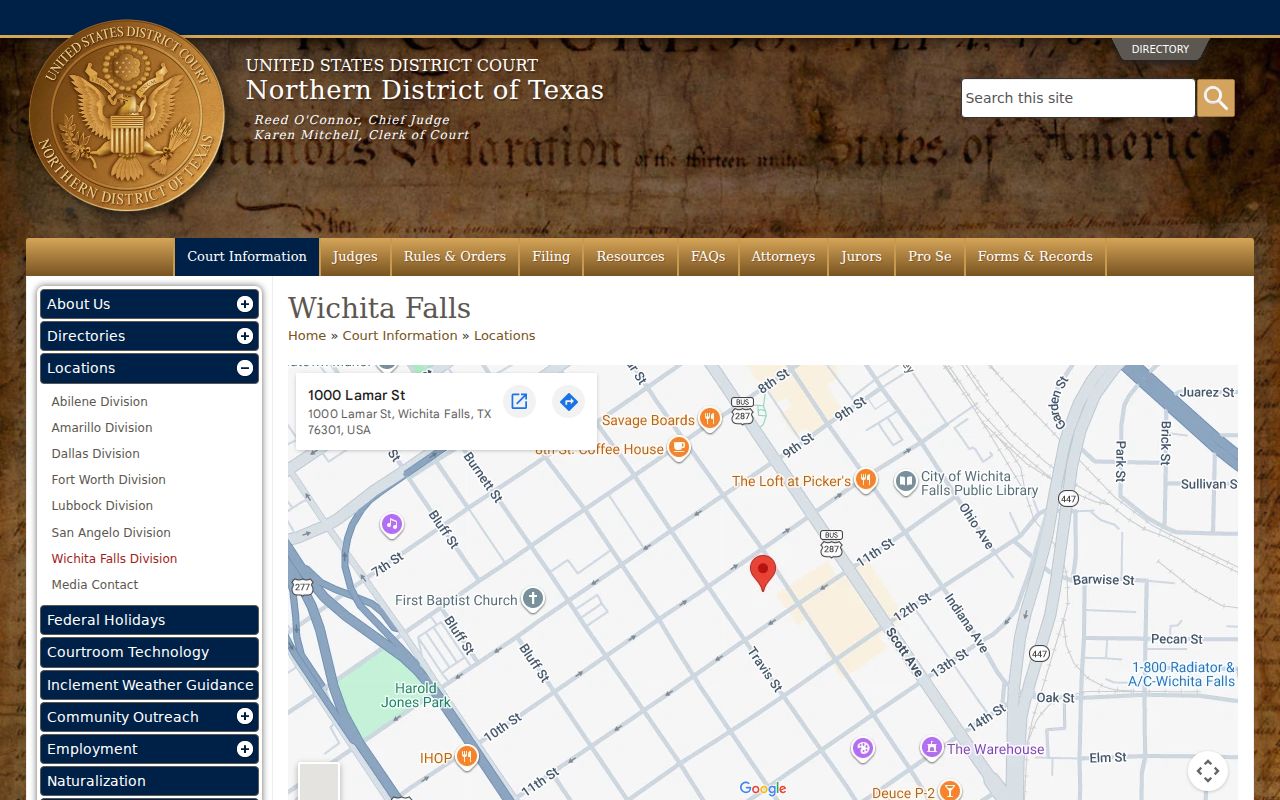
Paper and in-person filings route to the division clerk’s listed Fort Worth office, which prevents a wasted trip to an unstaffed session site.
After a federal sentence, the Bureau of Prisons Inmate Locator is the proper custody channel. Its interface is captured below.
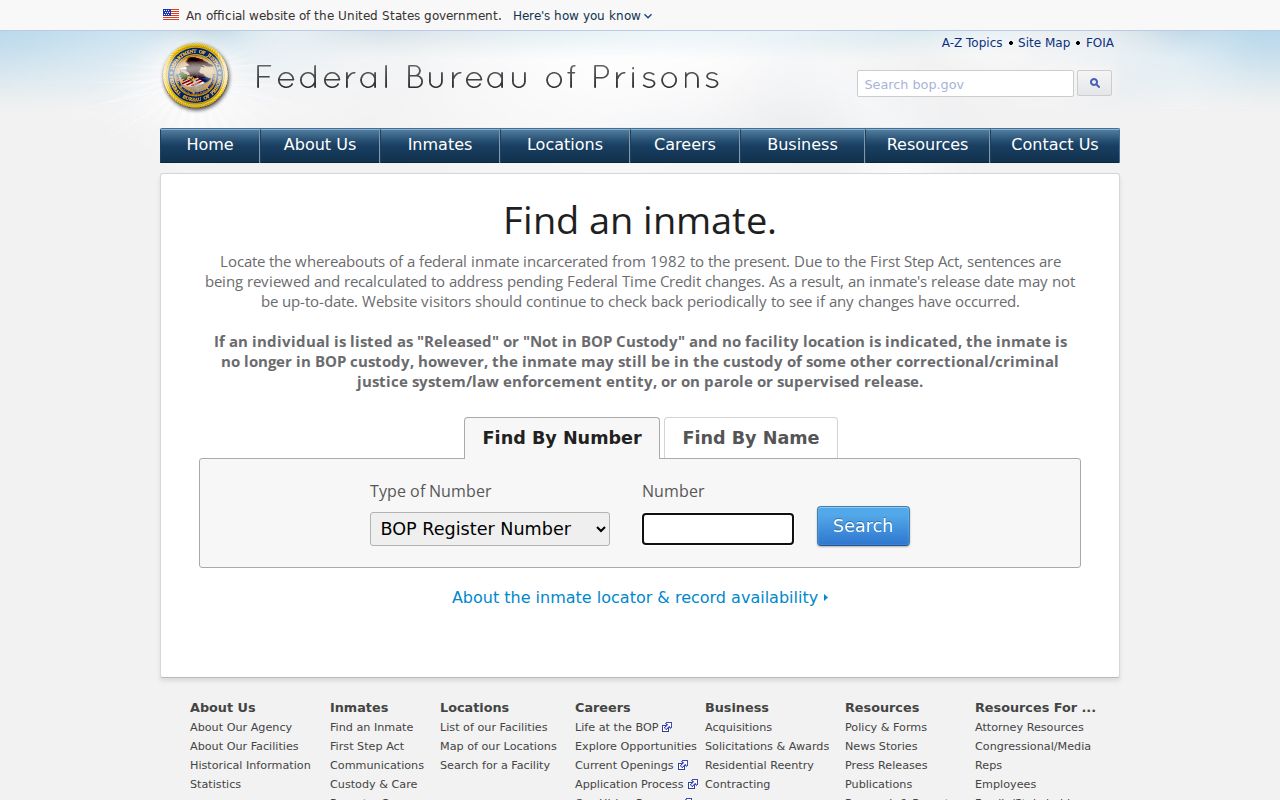
The locator can search by federal identifier or by name and traits, but it reports custody rather than the pleadings, rulings, and judgment in the federal court docket.